Reduce first-use friction with contextual information requests and recoverable steps.
Choose the first useful result
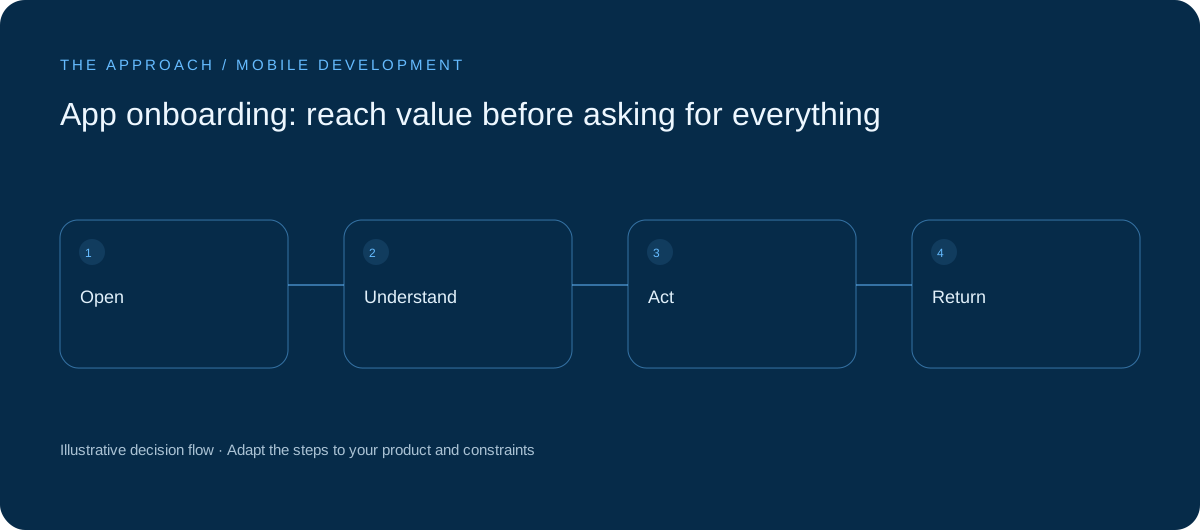
Users usually want to book, browse or record something, rather than complete a profile. Identify the earliest meaningful result and work backwards. Remove steps not needed yet. A short path to value explains the product better than introductory screens listing every feature the team has built.
Ask in context
Request information when the reason is clear. Delivery details belong near delivery; notification permission belongs near a useful reminder choice. Allow exploration before registration where the product permits it. Keep essential prices and conditions visible rather than hiding them behind sign-up to make a funnel metric look better.
Support interruptions
People change apps, lose connectivity and return later. Preserve safe progress and make the next step recognisable. Provide recovery for expired verification links. Help existing users find sign-in so they do not repeatedly create accounts. First use includes the person returning after forgetting what they completed yesterday.

Explain drop-off with evidence
Measure progress towards the first completed task using appropriate privacy choices. Review errors and delays with abandonment. Leaving after seeing a price differs from being blocked by a confusing field. Fix the specific obstacle instead of adding another introductory explanation around an unnecessarily difficult journey.
Your next working session.
- Define first value
- Delay unnecessary fields
- Recover interrupted progress
Bring one real, anonymised example to the discussion. Work through the choices above with the person responsible for the outcome, record the unresolved questions and agree who will investigate them.
Elite Apps editorial · Practical planning guidance. Examples and diagrams are illustrative; implementation depends on your requirements. Technical and supplier guidance can change.