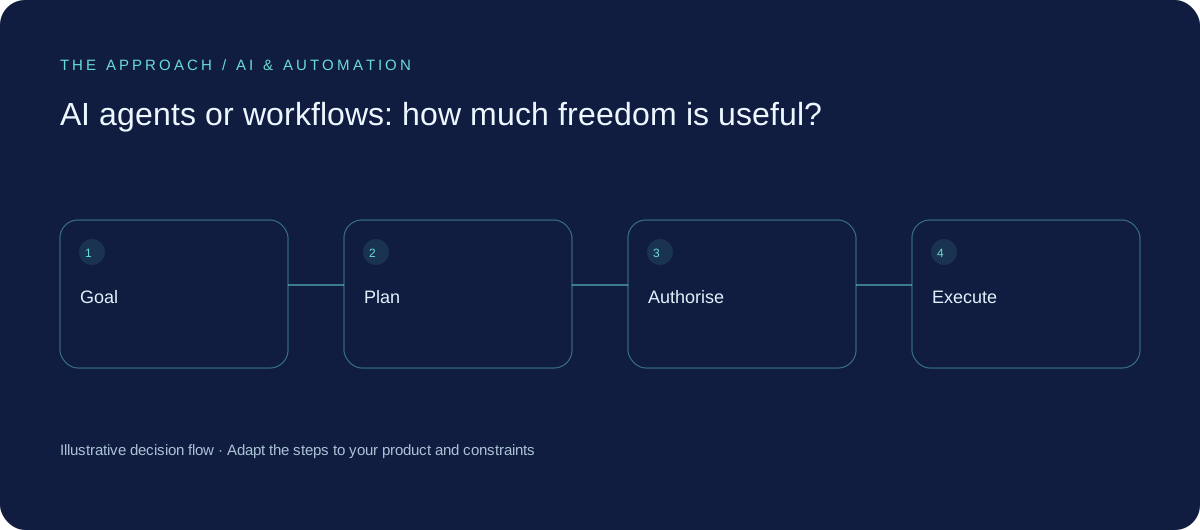
Decide how much autonomy a feature needs before connecting it to business tools.
Ask whether the route is known
If a process always validates a request, checks a record and creates a draft, explicit workflow code may be sufficient. An agent becomes more relevant when the next step depends on information discovered during the task. More freedom introduces more behaviour to evaluate. It should solve a real limitation rather than serve as a fashionable architecture label.
Separate planning from authority
A model can propose a sequence without permission to execute every step. Validate operations against the user’s role, allowed records and action limits. Credentials and access checks belong to the application. Confirmation should relate to the actual proposed action, not a vague approval given before its consequences are known.
Bound resources and time
Define maximum steps, timeouts, retries and completion conditions. Otherwise the system may repeat an unproductive action or spend resources on an impossible request. Make partial progress visible. Users need to distinguish a completed task from a prepared draft or a task stopped by an unavailable dependency.

Compare a simpler alternative
Run representative tasks through both the controlled workflow and proposed agent. Compare correctness, recovery, review effort and operating cost. Begin with read-only tasks or drafts before enabling external changes. Keep autonomy only where it produces a useful difference and preserve the ability to pause individual tools.
Your next working session.
- Prefer explicit steps when practical
- Validate tool operations
- Set stopping conditions
Bring one real, anonymised example to the discussion. Work through the choices above with the person responsible for the outcome, record the unresolved questions and agree who will investigate them.
Elite Apps editorial · Practical planning guidance. Examples and diagrams are illustrative; implementation depends on your requirements. Technical and supplier guidance can change.