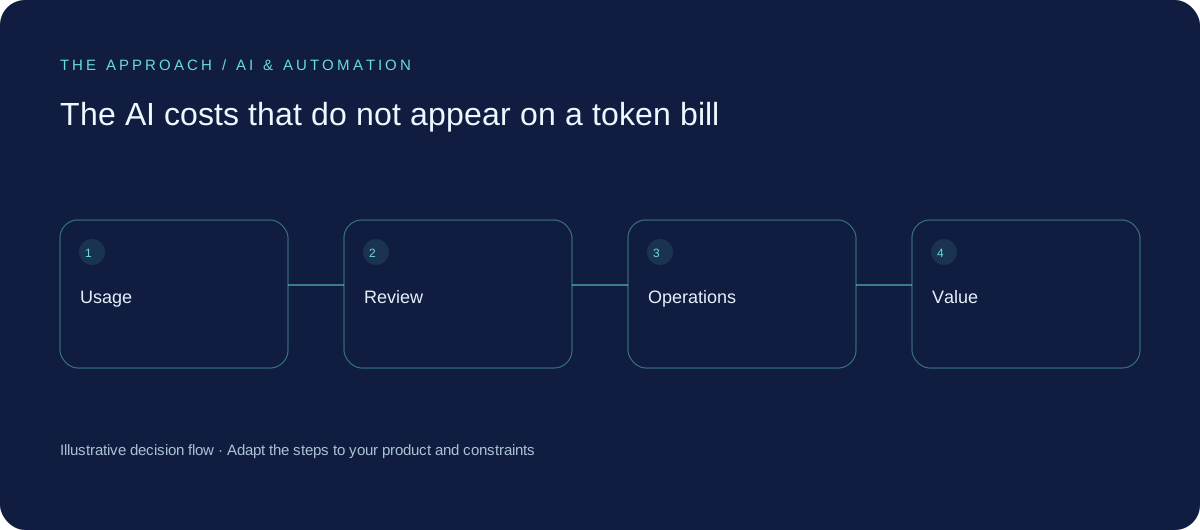
Budget for review, evaluation and operations as well as model usage.
Count complete journeys
One question can trigger retrieval, several model calls and a follow-up action. Retries and large documents change the cost further. Estimate representative complete journeys instead of multiplying a short prompt by an optimistic user count. Separate typical activity from unusually expensive requests and requests that should be rejected early.
Include the surrounding work
Sources need preparation, supplier settings need review and evaluation examples need maintenance. Someone must investigate mistakes after launch. These activities belong in the operating budget, not an imaginary setup phase that never returns. Assign owners so a successful prototype does not become a production feature nobody has time to maintain.
Control avoidable usage
Set request limits, document boundaries and timeouts. Cache only when freshness and permissions allow it. Use simpler rules for straightforward tasks. Monitor useful outcomes alongside spend: a cheap response requiring extensive correction may cost more overall than a more expensive output that a reviewer can use immediately.

Choose a meaningful unit
Cost per reviewed document or resolved request can support a business decision better than cost per model call. Compare that unit with the previous process and the value created. Supplier prices change, so use current commercial information for an estimate. Revisit assumptions when traffic patterns or review requirements change.
Your next working session.
- Estimate full journeys
- Budget for evaluation
- Track useful outcomes
Bring one real, anonymised example to the discussion. Work through the choices above with the person responsible for the outcome, record the unresolved questions and agree who will investigate them.
Elite Apps editorial · Practical planning guidance. Examples and diagrams are illustrative; implementation depends on your requirements. Technical and supplier guidance can change.