Keep customers informed and give human support the context needed to continue.
Publish a useful boundary
General product questions, account access and unusual refunds need different treatment. Decide which requests can be answered from approved material and which require staff. Explain the boundary simply. Customers should not need to repeat themselves several times to discover that the assistant cannot complete the requested task.
Design escalation explicitly
Provide an obvious handover path and collect only routing information. Confirm whether a ticket was created and where the response will arrive. Avoid promising immediate support when the team cannot provide it. A clear acknowledgement is more useful than invented reassurance about work supposedly happening behind the scenes.
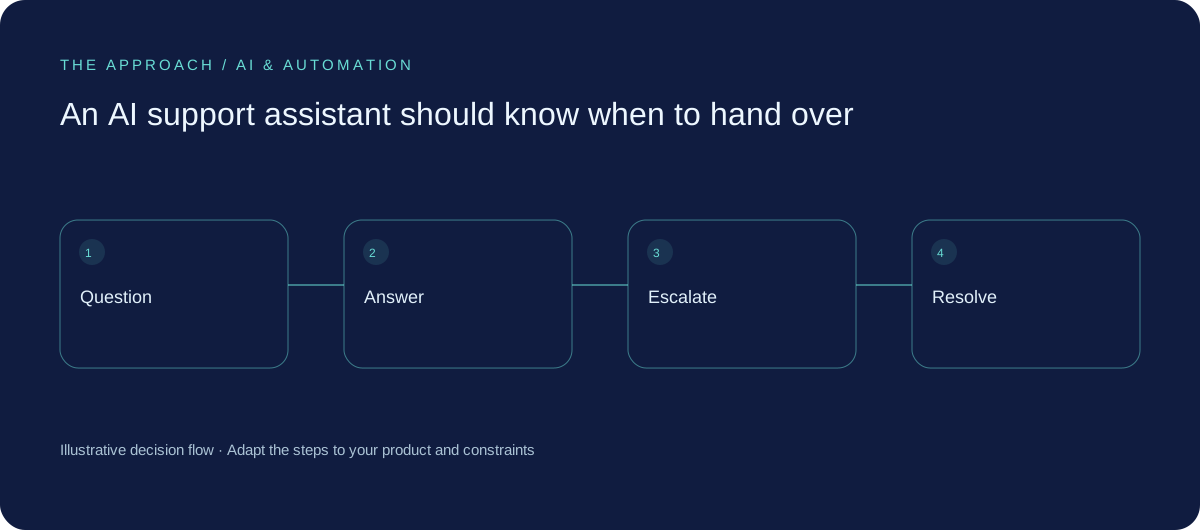
Send structured context
Provide the stated problem, steps attempted and relevant references. A full transcript may help, but staff should not need to reread it to understand the request. Distinguish generated summaries from confirmed facts. Exclude credentials and unrelated records from the handover payload.

Measure unresolved effort
Review repeated questions, abandoned conversations and late escalations. A high automated-response rate can hide poor outcomes. Track actual resolution and whether staff received enough context. Use those findings to improve sources, routing or the underlying product instead of simply making the assistant more verbose.
Your next working session.
- Explain boundaries
- Confirm escalation
- Measure resolution
Bring one real, anonymised example to the discussion. Work through the choices above with the person responsible for the outcome, record the unresolved questions and agree who will investigate them.
Elite Apps editorial · Practical planning guidance. Examples and diagrams are illustrative; implementation depends on your requirements. Technical and supplier guidance can change.