A practical guide to scoping an MVP around one valuable customer journey.
Start with a decision
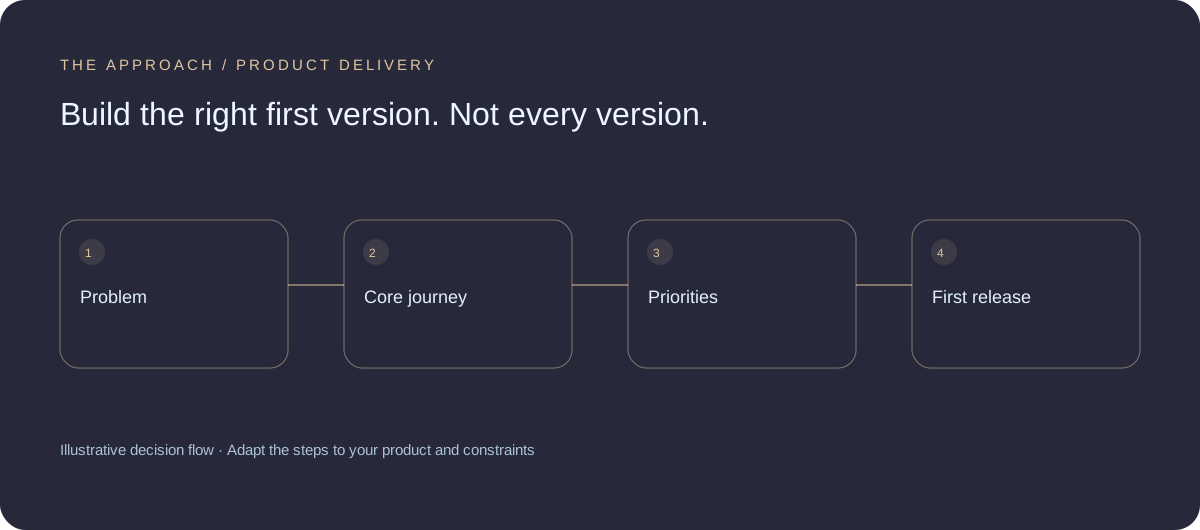
Write down who the product serves, the task they need to complete and the evidence that would justify further investment. A list of features is not a product strategy. Interview potential users about their current workaround before assuming a new app is the answer.
Map one complete journey
Choose a core task that creates value from start to finish. For a booking product, that might include finding availability, requesting a slot and receiving confirmation. A polished dashboard matters less if the booking itself cannot be completed.
Separate essential from later
Sort requirements into essential for the first useful journey, important after validation and optional. Include error states, permissions and basic support in the essential scope. Removing those often creates operational debt rather than a smaller product.

Define acceptance and learning
For each feature, agree what must work and what you hope to learn. Decide how the team will assess adoption without collecting unnecessary personal data. Review the first release against those questions before adding more features.
Prepare for handover
Document access, hosting, repository ownership and operational responsibilities. Budget for maintenance and feedback after release. A useful MVP is a starting point for learning, not an unfinished product without an owner.
Your next working session.
- Choose one audience
- Define the complete core journey
- Agree a learning objective
Bring one real, anonymised example to the discussion. Work through the choices above with the person responsible for the outcome, record the unresolved questions and agree who will investigate them.
Elite Apps editorial · Practical planning guidance. Examples and diagrams are illustrative; implementation depends on your requirements. Technical and supplier guidance can change.