What to share with a development partner before the first discovery conversation.
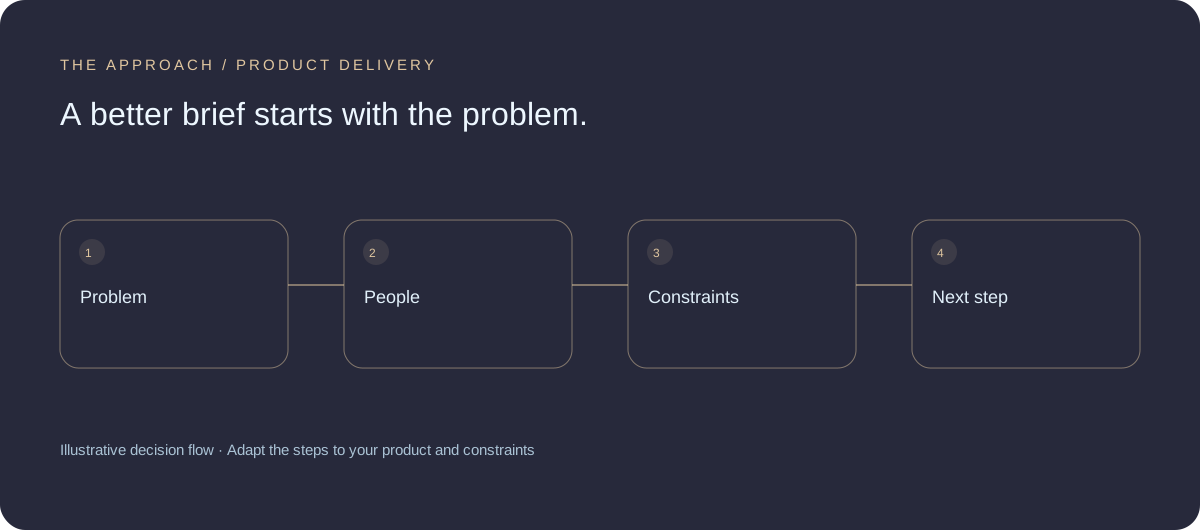
Describe the current situation
Start with who is affected and what they are trying to do. Describe the current process, including the workaround people use when it fails. “Our team copies booking information between three tools” is more useful than “We need a modern platform”. Include anonymised examples that show the difficulty without sharing sensitive records.
Explain the outcome
Describe what should become easier, faster or more reliable. Separate the business goal from an assumed feature. A request for an AI assistant may actually be a need to find internal guidance more consistently. The outcome gives the team room to recommend a simpler approach if one exists.
Map the people and systems
Identify the users, internal owners and systems involved. List any integrations, existing contracts and access constraints you know about. You do not need to understand every technical detail. Flagging an unknown early lets the team plan an investigation rather than assume the connection will be straightforward.

Make constraints visible
Share any budget boundary, immovable event or procurement requirement. Distinguish a preferred launch date from a deadline linked to a contractual obligation. Be open about the material already available, such as designs, brand guidelines, content and existing code. Constraints help shape an achievable first phase.
Leave room for discovery
A good initial brief does not need to prescribe every screen. Add the questions you want answered, the assumptions you want tested and who can help make decisions. Agree the next output: a discovery session, a technical review or a written proposal. Use the project planner to organise a starting brief without committing to a price or timeline.
Your next working session.
- Describe the current workaround
- Name decision-makers
- Share constraints early
Bring one real, anonymised example to the discussion. Work through the choices above with the person responsible for the outcome, record the unresolved questions and agree who will investigate them.
Elite Apps editorial · Practical planning guidance. Examples and diagrams are illustrative; implementation depends on your requirements. Technical and supplier guidance can change.