Choose events that explain whether people can complete the core product journey.
Write the questions first
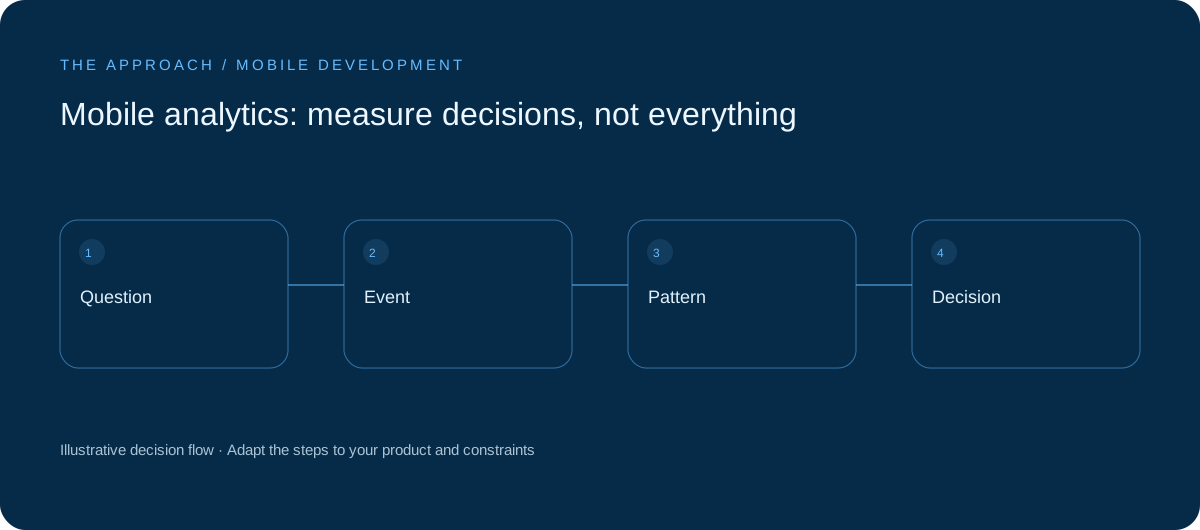
Decide what the team needs to learn after release: booking completion, checkout failure or adoption of a particular capability. Build events around those questions. A large event inventory with no decision behind it increases maintenance and can collect more detail than the product needs.
Define success precisely
A payment-button tap differs from a confirmed transaction. Agree event meanings and use server confirmation where appropriate. Account for retries and document naming. A redesign should not quietly redefine success. Otherwise an apparent improvement may be a measurement change rather than a better user experience.
Set a data boundary
Avoid sending names, message contents or sensitive records by default. Review consent, supplier settings and retention with the responsible owner. Test optional-tracking choices. Useful product measurement should reveal patterns without making a secondary copy of each person’s private activity in an analytics platform.

Combine patterns with context
Funnels identify where people leave but may not explain why. Combine appropriate aggregate data with error reports and feedback. Before reacting to a sudden change, check event delivery and sample sizes. Improve the actual obstacle rather than treating every abandoned step as a marketing problem.
Your next working session.
- Connect events to questions
- Confirm real outcomes
- Exclude unnecessary data
Bring one real, anonymised example to the discussion. Work through the choices above with the person responsible for the outcome, record the unresolved questions and agree who will investigate them.
Elite Apps editorial · Practical planning guidance. Examples and diagrams are illustrative; implementation depends on your requirements. Technical and supplier guidance can change.