Agree ownership, compatibility work and incident arrangements after launch.
Separate fixes from features
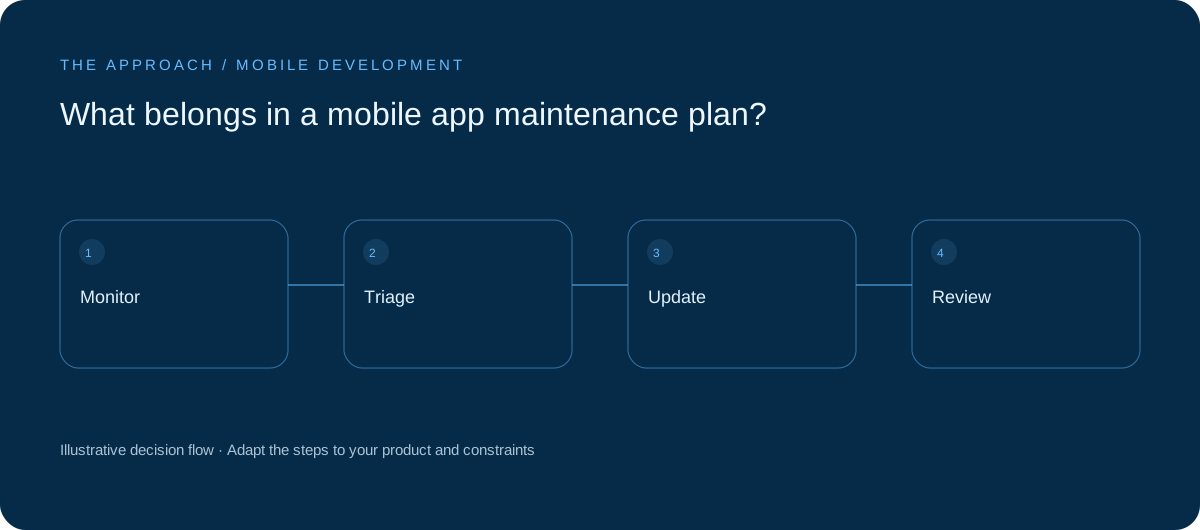
Maintenance keeps existing behaviour usable; a new workflow changes the product. Define the boundary and how uncertain requests are assessed. A defect report can reveal a missing business rule rather than broken code. Agree a decision process so ambiguity does not become a recurring commercial argument.
Name operational owners
Assign monitoring, store accounts, renewals and supplier notices. State support hours and escalation routes clearly. Avoid broad promises without defined coverage. An incident outside working hours needs an agreed response arrangement rather than a hopeful message to whichever developer last worked on the feature.
Keep compatibility manageable
Operating systems and third-party APIs change even when your code does not. Review dependencies at an agreed cadence. Preserve a working test environment and release process. Maintenance should keep the ability to make a safe update, not simply promise to investigate after compatibility has already failed.

Use feedback to prioritise
Review crash reports, support themes and customer comments together. Keep a small backlog with an owner. Document important decisions so a future maintainer understands the product. Sustainable support depends on access, testing and knowledge as much as purchased development hours.
Your next working session.
- Define coverage
- Assign account owners
- Preserve release knowledge
Bring one real, anonymised example to the discussion. Work through the choices above with the person responsible for the outcome, record the unresolved questions and agree who will investigate them.
Elite Apps editorial · Practical planning guidance. Examples and diagrams are illustrative; implementation depends on your requirements. Technical and supplier guidance can change.