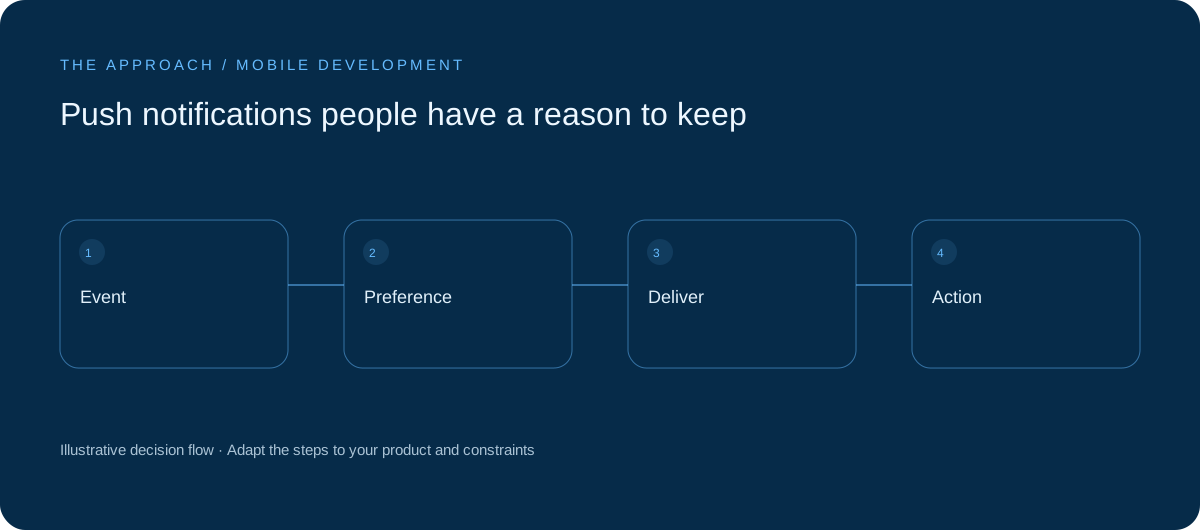
Connect every notification to a useful event, a preference and a destination.
Write the benefit
A booking reminder and a promotion serve different purposes. List proposed events and the benefit to the recipient. Remove messages intended only to generate app opens. Attention is limited. An interruption without a useful outcome makes later, genuinely helpful messages easier to ignore or disable.
Request permission meaningfully
Explain the messages before requesting access. Someone who has just booked understands reminders better than a person on first launch. Provide category preferences later. Keep the product usable when permission is declined, and make important information available within the app rather than relying on notification delivery alone.
Test the destination
Open the relevant record, subject to authentication and current permissions. Handle changed or expired records gracefully. Avoid exposing private details on a lock screen. Push delivery is not guaranteed, so critical operations need an agreed alternative and visible in-app status. A delivered message is not proof that someone acted on it.
Control timing and duplication
Account for user time zones, retries and frequency limits. Measure opt-outs and completion of the intended task alongside opens. Investigate repeated messages caused by event-processing errors. Treat notifications as part of product delivery, with ownership and tests, rather than a final promotional layer added before release.
Your next working session.
- State recipient value
- Offer category preferences
- Verify deep links
Bring one real, anonymised example to the discussion. Work through the choices above with the person responsible for the outcome, record the unresolved questions and agree who will investigate them.
Elite Apps editorial · Practical planning guidance. Examples and diagrams are illustrative; implementation depends on your requirements. Technical and supplier guidance can change.