Replace vague requirements with examples a buyer, designer and developer can all review.
Describe observable behaviour
“The booking system should be easy” expresses an aspiration, not a testable expectation. Describe what a user can do, the conditions and the result. For example, an available slot becomes reserved only after the defined confirmation step. Include the message shown if another customer takes the place first.
Include boundaries
State who may act, what data is required and what happens when dependencies fail. Clarify time zones, cancellation limits and incomplete records where relevant. Missing boundaries often become disagreements late in development. A short example of a rejected action can be more valuable than another paragraph describing the successful screen.
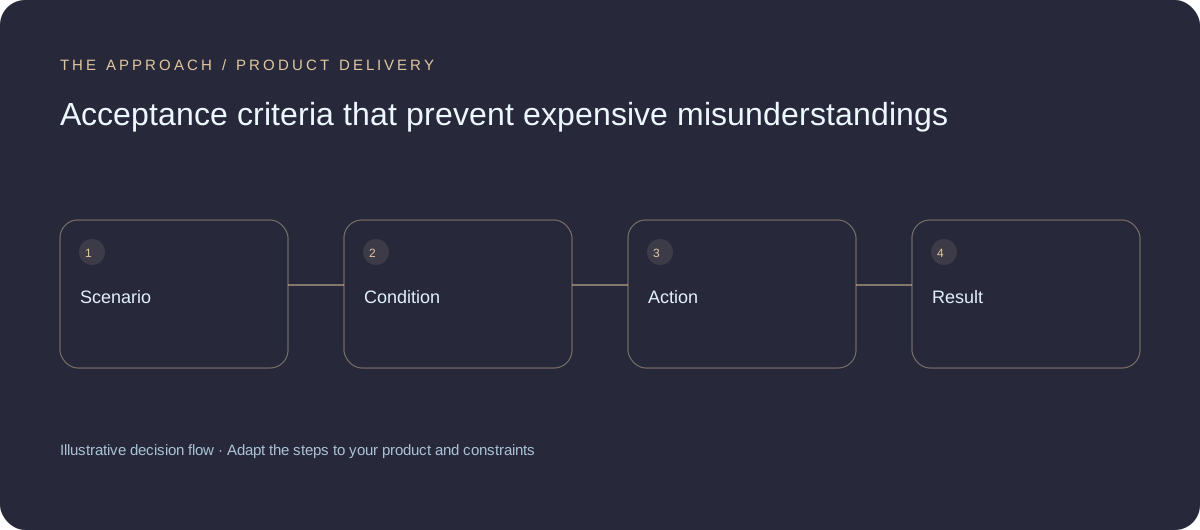
Review examples together
Use plain language and ask different roles to walk through the same scenario. Resolve conflicting assumptions before implementing them. Acceptance criteria should support conversation rather than become a document nobody can interpret without its author. Keep a record of changed decisions when discovery or feedback reveals a better approach.

Avoid specifying every implementation detail
Define the outcome without prescribing unnecessary internal structure. The team still needs room to choose a maintainable implementation. Separate genuine constraints from preferences. During review, compare the working journey with the agreed criteria and capture any new request as an explicit scope decision.
Your next working session.
- Use observable outcomes
- Describe rejected actions
- Review examples together
Bring one real, anonymised example to the discussion. Work through the choices above with the person responsible for the outcome, record the unresolved questions and agree who will investigate them.
Elite Apps editorial · Practical planning guidance. Examples and diagrams are illustrative; implementation depends on your requirements. Technical and supplier guidance can change.