Evaluate collaboration, evidence and operational ownership before signing a proposal.
Ask about a relevant problem
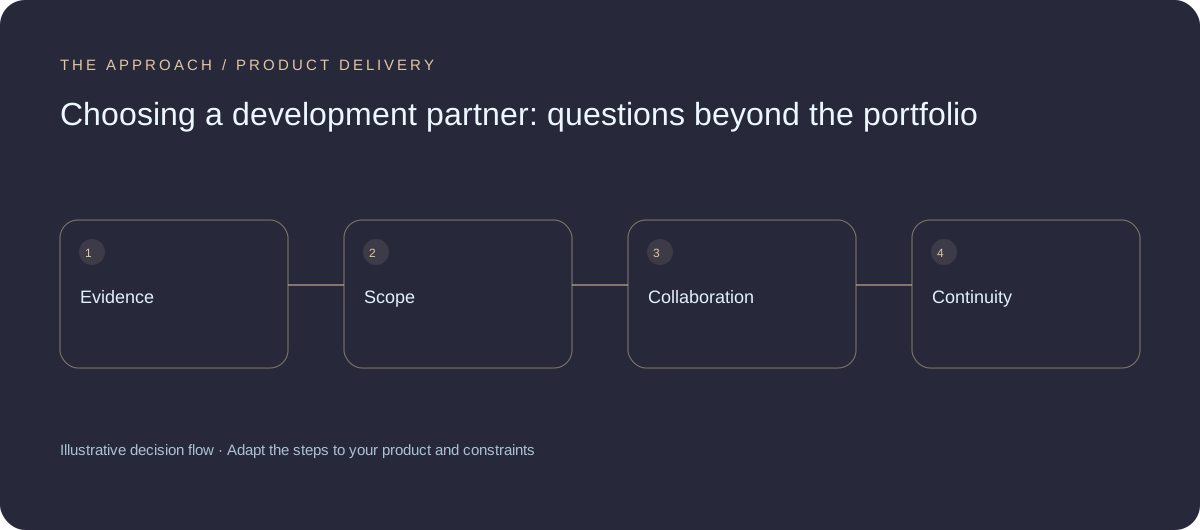
A polished portfolio shows presentation quality but may not reveal the supplier’s role. Ask which decisions they owned and what evidence can be shared with permission. Discuss a problem similar to yours rather than only an industry label. Avoid treating unverified logos or unsupported results as substitutes for a clear explanation of the work.
Review the proposal assumptions
Compare scope, exclusions, dependencies and acceptance criteria. Ask what discovery will resolve and how changes affect the plan. A precise-looking estimate can still rest on major unknowns. A strong partner explains uncertainty in plain language and proposes a practical way to reduce it before a large commitment.
Understand the working relationship
Meet the people responsible for product decisions and delivery. Agree review rhythm, communication and escalation. Ask what your own team must provide and when. Collaboration depends on accessible decision-makers on both sides; a supplier cannot compensate indefinitely for missing requirements or delayed approvals without affecting the plan.

Settle ownership and continuity
Clarify repository access, accounts, intellectual-property terms and support arrangements in the agreement. Ask what handover includes and how another team could maintain the product. The best relationship is one you choose to continue because it works, supported by transparent access and documentation rather than avoidable dependency.
Your next working session.
- Seek relevant evidence
- Compare assumptions
- Clarify ownership in writing
Bring one real, anonymised example to the discussion. Work through the choices above with the person responsible for the outcome, record the unresolved questions and agree who will investigate them.
Elite Apps editorial · Practical planning guidance. Examples and diagrams are illustrative; implementation depends on your requirements. Technical and supplier guidance can change.