Understand loading, responsiveness and layout stability without chasing an isolated score.
Connect metrics to experience
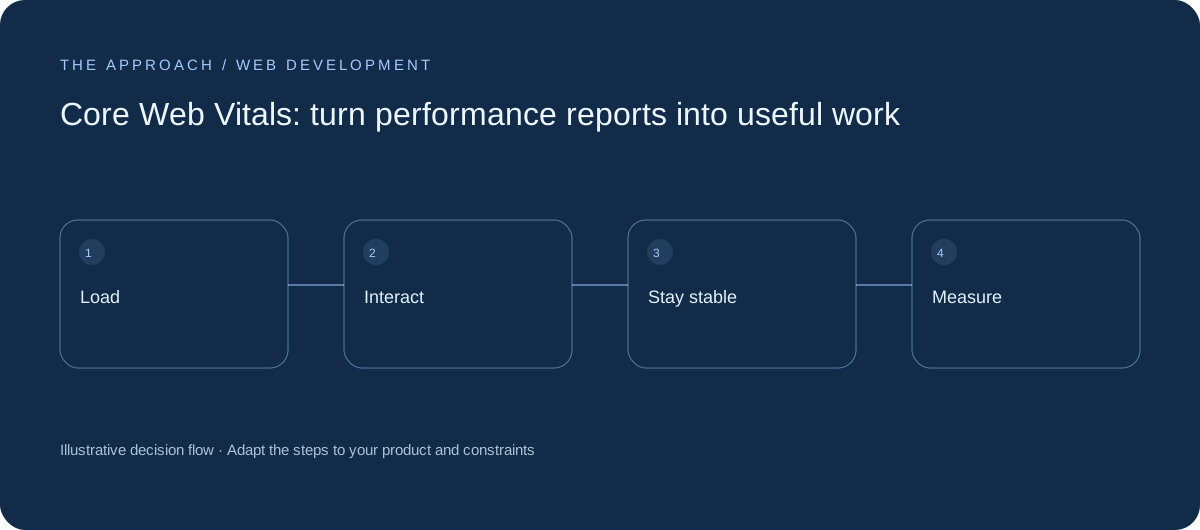
Core Web Vitals describe aspects of loading, interaction responsiveness and visual stability. A slow main image, a blocked button and a shifting form are different problems. Treat a report as a way to locate friction, not a single verdict on the whole website. Good laboratory results do not prove every real visitor has a good experience.
Find the important page element
For loading problems, inspect the main content the visitor needs first. An oversized image or delayed font may matter more than a small decorative icon. Serve appropriately sized media and avoid making essential content wait for unnecessary client work. Verify changes on representative pages rather than assuming the homepage represents every route.
Keep interaction and layout dependable
Heavy scripts can delay responses even after a page appears ready. Reserve space for media and avoid inserting content above an active task. Test forms, navigation and consent choices under realistic conditions. A page that moves while someone tries to tap an action creates practical friction regardless of its visual polish.

Compare field and lab evidence
Controlled tests help diagnose a change; field measurements describe actual visits when sufficient data is available. Review device groups and the distribution of results, not only an average. Use current web.dev guidance for metric definitions. Prioritise improvements affecting important journeys and repeat the same measurement after each meaningful change.
Your next working session.
- Inspect real journeys
- Reserve media space
- Compare consistent measurements
Bring one real, anonymised example to the discussion. Work through the choices above with the person responsible for the outcome, record the unresolved questions and agree who will investigate them.
Further reading
Primary references for the technical concepts discussed in this guide:
Elite Apps editorial · Practical planning guidance. Examples and diagrams are illustrative; implementation depends on your requirements. Technical and supplier guidance can change.