Choose a platform around the visitor’s task and the operational work behind it.
Start with the visitor’s job
A company website helps someone understand an offer and make contact. A web application lets someone perform work, such as manage bookings or approve a document. Many businesses need both. Write the main visitor tasks before choosing a framework. A feature-heavy application is not automatically a better answer to a straightforward marketing need.
Identify the hidden responsibilities
Accounts bring access control and recovery. File uploads bring storage and validation. Payments bring asynchronous confirmation and support questions. Map these responsibilities before comparing costs. A simple-looking interface may depend on substantial backend behaviour, while a strong informational site may need more editorial effort than custom application code.
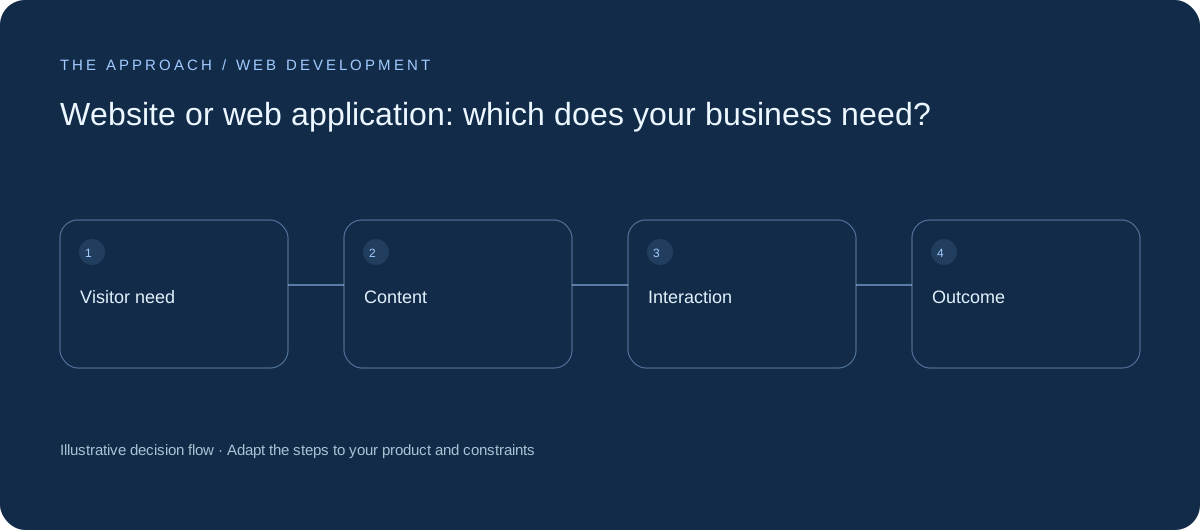
Plan content and interaction separately
Service descriptions, guides and contact information should remain easy to access and maintain. Interactive tasks need clear states, validation and recovery. Use the simplest suitable approach for each. There is no requirement to make every page behave like a dashboard just because one part of the website needs richer interactions.

Choose a useful first phase
If demand is uncertain, a clear service website and enquiry process may answer an important question before a portal is justified. If staff already spend hours processing repetitive requests, a focused application may provide immediate value. Agree which outcome the first phase should establish and what evidence would justify expanding it.
Your next working session.
- Write visitor tasks
- Map operational obligations
- Choose a measurable first phase
Bring one real, anonymised example to the discussion. Work through the choices above with the person responsible for the outcome, record the unresolved questions and agree who will investigate them.
Elite Apps editorial · Practical planning guidance. Examples and diagrams are illustrative; implementation depends on your requirements. Technical and supplier guidance can change.