Answer a buyer’s practical questions with useful detail and a clear next step.
Explain who the service helps
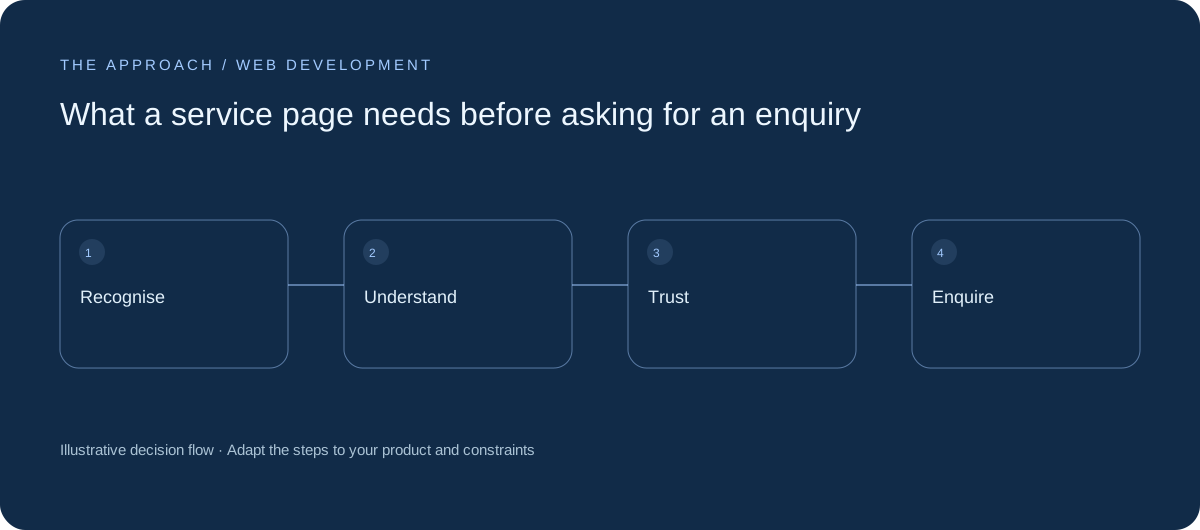
A visitor should recognise their problem before encountering a long technology list. Describe the situations the service suits and the outcomes it can support. Be specific enough to help someone self-select. If the offering does not fit a certain need, clarity saves time for both the visitor and the sales team.
Make the work tangible
Explain the usual activities and outputs without pretending every engagement is identical. A discovery brief, tested prototype and integration plan are easier to assess than a claim of excellence. Show relevant examples where publication permission exists. Label concepts and illustrative workflows so visitors can distinguish them from completed client work.
Reduce uncertainty honestly
Address scope, collaboration, ownership and what happens after launch. Do not invent fixed prices or delivery promises when those depend on requirements. A clear explanation of how an estimate is formed can build more trust than an unsupported starting price that excludes essential work. Link to related answers for visitors who need more detail.

Ask for a manageable next step
Invite a conversation about the problem rather than demanding a perfect specification. Explain what information is useful and what happens next. Keep the enquiry form proportionate. Measure completed, relevant enquiries and the questions prospects still ask, then improve the page around those gaps.
Your next working session.
- State the audience
- Show concrete outputs
- Explain the next step
Bring one real, anonymised example to the discussion. Work through the choices above with the person responsible for the outcome, record the unresolved questions and agree who will investigate them.
Elite Apps editorial · Practical planning guidance. Examples and diagrams are illustrative; implementation depends on your requirements. Technical and supplier guidance can change.