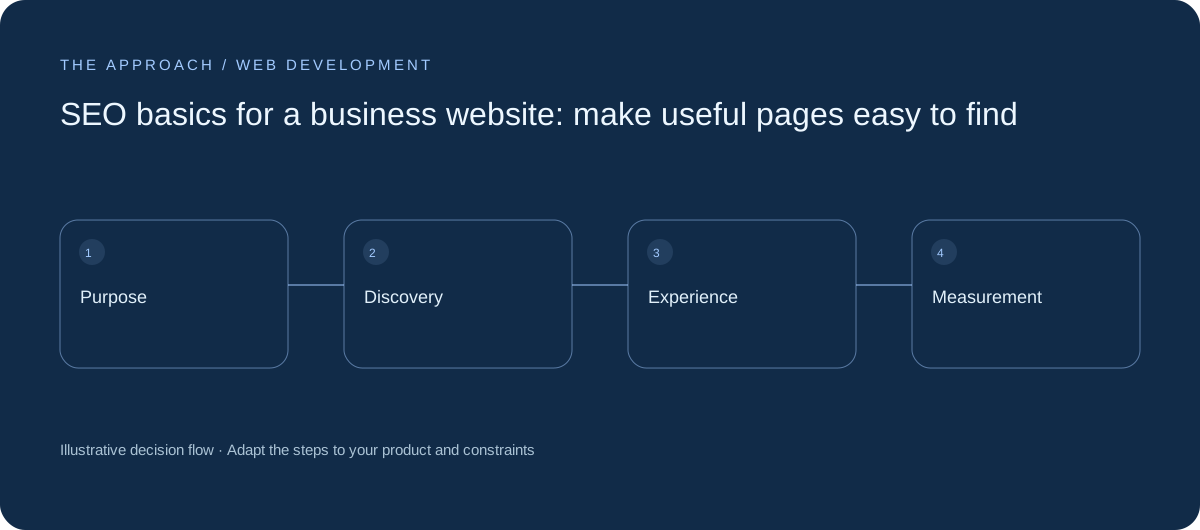
Start with clear customer questions, accessible content and a technically sound website. Then measure search visits and enquiries separately.
Give each page a useful purpose
A service page should explain who the service helps, the problems it addresses, what an engagement involves and how to take the next step. An article should answer a specific question with enough context to be useful. For a UK audience, use relevant terminology and genuine business information. Do not create nearly identical pages for every town or claim local offices that do not exist.
Make discovery and indexing straightforward
Link important pages from relevant parts of the website and include canonical, indexable URLs in the sitemap. Check that pages return the intended HTTP status and that robots controls do not accidentally block content. A submitted sitemap helps discovery but does not guarantee indexing or rankings. Use Search Console to distinguish technical failures from pages Google has crawled but not chosen to index.
Write titles and descriptions that match the page
Use a descriptive title that reflects the actual answer or service. A clear summary can help a searcher decide whether the page addresses their question, although Google may display different text. Avoid promises the content cannot support. Structure headings so a visitor can scan the argument, and use meaningful link text instead of making every link say “learn more”.

Protect the experience after the click
A search visit is wasted if the page is broken, unreadable on a phone or slow to show useful content. Compress images, reserve space for media and limit unnecessary scripts. Check forms with a keyboard and explain errors clearly. When replacing a website, preserve valuable URLs or redirect them to closely related replacements; do not send unrelated articles to the homepage merely to remove a 404.
Measure progress without confusing the metrics
Search impressions mean a page appeared in results; clicks mean someone selected it. Analytics can then show consented visits, engagement and recorded enquiries. Review these measures together by landing page, device and audience. A page with many impressions but no clicks needs a different investigation from one attracting relevant visitors who cannot complete the contact form. Work from a dated baseline and make one meaningful change at a time.
Your next working session.
- Check important URLs and status codes
- Match each title to a real customer question
- Compare organic landing-page visits and enquiries
Bring one real, anonymised example to the discussion. Work through the choices above with the person responsible for the outcome, record the unresolved questions and agree who will investigate them.
Further reading
Primary references for the technical concepts discussed in this guide:
Elite Apps editorial · Practical planning guidance. Examples and diagrams are illustrative; implementation depends on your requirements. Technical and supplier guidance can change.